

Ordering Detox Medication
Sample policies and producedures for New Medication Orders, Ordering of Stock Medications, and Ordering Medications through a Contract Pharmacy
Text Versions:
Effective Date of This Revision: January 9, 2009
Contact: Medical Director 310-679-9126 , Administration
Applies to:
* Officers
* Other agents
* Staff
* Visitors
* Student clinicians
* Contractors
* Volunteers
* Subcontractors / Business Associates
PURPOSE:
The purpose of this document is to outline policy and procedures for implementing medication orders in the Detoxification Units of BHS’s Chemical Dependency Recovery Hospitals.
POLICY:
Medications (including over the counter drugs, topical preparations, and vitamins), may only be ordered by individuals who are authorized by their respective act to prescribe such and who have been granted privileges at this facility.
PROCEDURES:
A written order signed by the authorized prescriber shall be included in the patient’s record for all medications administered. The medication orders must be complete and include all of the following:
• Name and strength of the medication
• Route of administration (If no route is indicated, oral route is assumed.)
• Frequency of administration (including “PRN” orders)
• Indication for use on PRN orders
• Date and time of writing
• Signature of physician (or physician’ name, if a verbal/telephone order)
Orders containing less than the above information shall be considered incomplete and must be clarified by a licensed nurse with the prescribing physician, the Medical Director, or the alternate physician on duty before they can be acted upon.
Individual prescriptions ordered for patients during their stay shall not be released to the patient upon discharge unless ordered for take home use by the physician.
Over-the-counter medications provided by the facility shall not be sent home with patients upon discharge unless ordered for take home use by the physician.
Verbal or telephone orders for drugs shall be given only to a physician, licensed nurse, physician assistant, or registered pharmacist by a person lawfully able to prescribe. Telephone orders shall be limited to emergencies and situations where it is impractical for the physician to come in and personally give the order. The order shall be entered promptly in the patient health record, on the Physician Order Form, noting the name of the person giving the verbal order and the signature of the person receiving the order. The prescriber shall countersign the order within 48 hours. When the alternate physician on duty has given verbal orders, the Medical Director shall sign the order if the alternate prescribing physician is not on duty the following day. Within 30 days the prescribing physician must sign the original order.
Any patient requiring medications after discharge shall be referred to his or her own physician for continued treatment after stay. The patient shall be instructed on medications that are to be continued at home. The Medical Director or the alternate physician may write a discharge prescription to cover patient until ongoing care is established. The remaining portion of individual prescriptions obtained for the patient may be sent home with the patient if approved by the physician.
PRN orders for Schedule II, III, or IV drugs of the Federal Controlled Substance Act (Title II, Public Law 91513) shall be administered only by licensed nursing staff after adequate assessment of the patient’s status in accordance with facility policy.
The Medical Director or the alternate physician shall review all medication orders at least every 30 days.
Only an authorized prescriber shall write medication orders.
An up-to-date list of authorized prescribers shall be available in all areas where medication is administered or dispensed.
Telephone orders shall be accepted only from individuals on the list of authorized prescribers.
Medication orders that contain abbreviations and chemical symbols shall be carried out only if the abbreviations and symbols are on a standard list approved by the physician members of the professional staff.
Effective Date of This Revision: January 9, 2009
Contact: Medical Director 310-679-9126, Administration
Applies to:
* Officers
* Other agents
* Staff
* Visitors
* Student clinicians
* Contractors
* Volunteers
* Subcontractors / Business Associates
PURPOSE:
The purpose of this document is to outline policy and procedures for ordering medications through Contract Pharmacy in the Detoxification Units of BHS’s Chemical Dependency Recovery Hospitals.
POLICY:
Each Chemical Dependency Recovery Center shall maintain a contract with a licensed local pharmacy for the purpose of dispensing medications ordered by the Medical Director, or the alternate physician on duty, for those patients approved for the self-administration of medications. The Contract Pharmacy may also be used to supplement the stock medications approved in the Recovery Center formulary, or other medications as per patient need. The prescription service contract(s) shall provide for the 24 hour, 7 days per week availability of services by a licensed pharmacist.
PROCEDURES:
The Medical Director or the alternate physician or the licensed nurse on duty shall place the prescription by phone, giving the patient’s full name, the name of the medication as well as dosage, route, frequency, stop date and quantity prescribed. The contract pharmacist shall put the prescription in writing, according to state laws.
The pharmacy will attempt to provide generic drugs for patients whenever they are available. If a generic medication is provided, the pharmacy will identify on the label for which brad the generic medication is being substituted. Warning labels shall be used whenever appropriate in labeling medications.
The pharmacy will deliver the medications to the facility by courier according to contract. The licensed nurse or certified counselor will receive the medications that have been ordered from the pharmacy. Their receipt and proper identification through labeling shall be verified by initialing the Pharmacy Medication Order form.
If there are any major discrepancies, physician’s order and the prescription shall be reviewed by an RN. The physician on duty shall be contacted for verification or clarification.
When the process of receiving the medications from the contract pharmacy is complete, the billing receipts shall be sent to Administration for payment.
The consultant pharmacist shall periodically review the invoices from the contract pharmacy to confirm that maximum cost effectiveness and drug utilization is achieved. Findings and/or recommendations shall be submitted to the Utilization Review Committee at least quarterly.
Effective Date of This Revision: January 9, 2009
Contact: Medical Director 310-679-9126, Administration
Applies to:
* Officers
* Other agents
* Staff
* Visitors
* Student clinicians
* Contractors
* Volunteers
* Subcontractors / Business Associates
PURPOSE:
The purpose of this document is to outline policy and procedures for ordering of stock medications in the Detoxification Units of BHS’s Chemical Dependency Recovery Hospitals.
POLICY:
Only those medications listed in the approved formulary shall be ordered for stock. Whenever available, generic medications shall be used.
PROCEDURES:
The stock medications maintained at the facility shall be ordered as necessary in the following manner:
• A list of needed stock medications shall be kept in the medication room.
• The Director of Nursing (DON) or the designated alternate RN reviews the list for accuracy and forwards it to the appropriate administrative personnel to obtain a purchase order.
• The DON or designated alternate RN places the orders with the appropriate drug company following the Purchasing policies and procedures.
• When the order arrives, it is delivered to administration and received by administrative personnel, who immediately notifies the DON or designated alternate of a drug delivery. These packages are not opened in administration. If the DON or designated alternate is unavailable, the package is received by the appropriate administrative personnel and locked in storage in the administrative offices. The DON or the designated alternate is notified of the delivery.
• The DON or designated alternate receives the delivery and checks the invoice with the original order. Any invoices that contain C-III through C-V controlled substances shall be stamped with a 1-inch red “C” in the lower right corner. A notation of date and quantity of all C-II drugs received shall be entered on the appropriate column of the facility copy of DEA order form 222.
• The DON, or the designated alternate, is responsible for storing these medications according to facility policy.
Related Posts
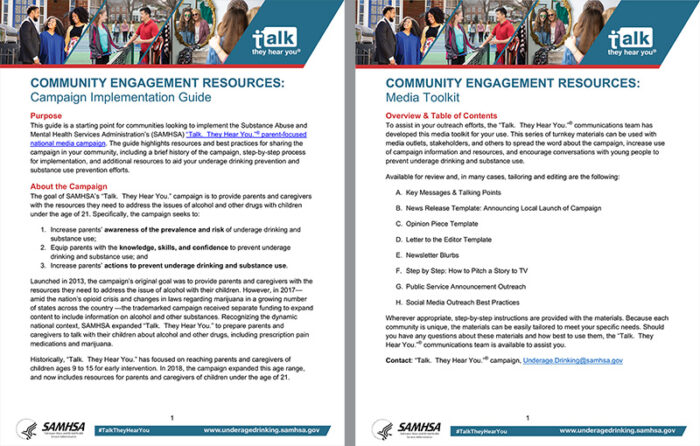
Community Engagement Resources
Various tools and documents that will support SUD providers with proper languages, media involvement, and overall techniques to use when engaging with the community.

Substance Misuse Prevention for Young Adults
This guide discusses effective prevention practices to mitigate risk factors associated with substance misuse and promote protective factors among: all young adults generally; young adults at significantly higher risk for substance misuse; and young adults who are not diagnosed with a SUD but are engaging in substance misuse.
Perinatal Substance Use: Family Toolkit
This booklet provides tools you need to be as healthy as you can be during pregnancy, whether or not you decide to stop using.
