
Integrating Harm Reduction Strategies into Services and Supports for Young Adults Experiencing Homelessness
This document describes integrating various harm reduction approaches into young adult services who are experiencing homelessness.
Children & Families
Integrating Harm Reduction Strategies into Services and Supports for Young Adults Experiencing Homelessness Brief
The Administration for Children and Families (ACF) is committed to promoting the economic and social well-being of children, youth, families, individuals, and communities. As part of our work, we support the HHS Overdose Prevention Strategy (OPS) to ensure individuals with a substance use disorder (SUD) are supported and connected to substance use treatment, human services, and other necessary resources. Harm reduction, an evidence-based approach critical to engaging with people who use drugs and equipping them with life-saving tools and information, is one of the four priority areas in the agency’s overdose prevention strategy. This brief provides information and resources about harm reduction services for young adults experiencing homelessness.
In 2021, over 46.3 million people ages 12 and up in the United States met the criteria for having SUD. Youth transitioning into adulthood (ages 18-25) have some of the highest rates of substance misuse in the population. Results from the 2021 National Survey on Drug Use and Health Survey found that, in the past month, 29% of young adults reported binge drinking and 24% had used marijuana. The percentage of illicit drug use in the past year (38%) was highest among young adults, compared to other age groups.
Compared to other developmental periods, the co-occurrence of serious mental health conditions and SUD is concentrated in young adulthood. Problematic substance use has resulted in increased rates of overdose deaths among young people, especially those who identify as Black/African American and American Indian/Alaskan Native. From 2019 to 2020, drug overdose death rates increased by 44% and 39% among Black/African American and American Indian or Alaska Native (AI/AN) people, respectively.
Young adults experiencing homelessness or housing instability are at particularly high risk for developing a SUD and experiencing challenges accessing care and support. Specifically, young adults experiencing homelessness or housing instability are more likely to use substances than their peers who are not homeless. It is estimated 39 to 70 percent of young people experiencing homelessness misuse alcohol and other substances. Over 60% of youth who have run away from home due to a family crisis or other conflict, or who are experiencing homelessness, met lifetime criteria for a substance use disorder.1
Targeted efforts that are culturally and linguistically relevant and respectful to individuals are necessary to ensure young adults experiencing homelessness have better access to the resources and supports they need to gain stability and safety. Integrating harm reduction strategies into social service programs, including programs serving young adults at risk or experiencing homelessness, is a critical strategy to prevent overdoses and improve child, youth, and family well-being.
1 Schlecht, C., Kull, M. A., Griffin, A. M., & Garza, A. (2022). Runaway and Homeless Youth Training and Technical Assistance Center: National Needs Assessment 2022 Final Report. Runaway and Homeless Youth Training and Technical Assistance Center (RHYTTAC).
Background on Harm Reduction Strategies
Harm reduction is an evidence-based approach critical to engaging with people who use drugs and equipping them with life-saving tools and information. The approach can create positive change and potentially save lives as part of a comprehensive prevention strategy and continuum of care. Through incorporating community-driven public health strategies, harm reduction empowers people who use alcohol and drugs and their families to choose to live healthy, self-directed, and purpose-filled lives. The approach centers the lived and living experiences of people who use alcohol and drugs. It aims to meet people where they are and address conditions of use, along with the use itself, such as mental health and social service needs.
Evidence-based harm reduction strategies include abstinence as well as safer and managed use (e.g., syringe services programs, use of fentanyl test strips, and the overdose reversal drug naloxone). Harm reduction incorporates a spectrum of non-judgmental services and strategies, rooted in compassion and dignity to prevent substance misuse-related injury, disease, overdose, and death. Harm reduction provides opportunities for incremental positive change toward wellness.
Harm Reduction Resources
Currently, many ACF programs, including the Runaway and Homeless Youth (RHY) Program, play a crucial role in providing the types of supports youth need to find physical, social, and emotional stability. RHY programs specifically are skilled at trauma-informed approaches that build relationships between providers and youth and young adults. They also have tremendous reach across communities. More than 64% of RHY grant recipients identified “providing harm reduction” as an area they would want more training and technical assistance, suggesting the desire to integrate harm reduction into their existing services.2 Tailored and skilled human services, like those provided by RHY providers, are needed to support young adults experiencing homelessness, who may be more susceptible to the use or misuse of substances.
It is important that youth-serving programs make intentional efforts to explore available harm reduction resources, use best practices, and inform young adults of the ways they can help themselves and their peers. ACF encourages its grant recipients, including providers working with young adults experiencing homelessness, to explore the below resources and strategies to ensure all youth and young adults have access to the resources they need.
2 Schlecht, C., Kull, M. A., Griffin, A. M., & Garza, A. (2022). Runaway and Homeless Youth Training and Technical Assistance Center: National Needs Assessment 2022 Final Report. Runaway and Homeless Youth Training and Technical Assistance Center (RHYTTAC).
Technical Assistance and Training
National Harm Reduction Technical Assistance Center - This TA Center provides free help to anyone in the country providing (or planning to provide) harm reduction services to their community. Organizations can request assistance from the Center through an online form and connect to experts who will respond in a timely manner.
Runaway and Homeless Youth Training and Technical Assistance Center – This TA Center assists organizations in developing and implementing effective approaches to serve young people who have run away and/or are impacted by homelessness; accessing new resources; and establishing linkages with other programs with similar interests and concerns. Individuals can create a website account to access the content.
Learn and Use Best Practices
Draft Harm Reduction Framework –The SAMHSA Harm Reduction Framework is the first document to comprehensively outline harm reduction and its role within the Department of Health and Human Services (HHS). The Framework will inform federal harm reduction activities moving forward, as well as related policies, programs, and practices.
Evidence-Based Practices Resource Center – This Center provides communities, clinicians, policymakers and key partners with the information and tools to incorporate evidence-based practices into their communities or clinical settings.
Overdose Prevention and Naloxone Manual – This manual outlines the process of developing an Overdose Prevention and Education Program, with or without a take- home naloxone component.
Overdose Prevention Toolkit – This toolkit includes basic information on preventing overdoses including overdose drug facts, essential steps for first responders, information for prescribers as well as safety advice for patients and family members.
Expanding Access to and Use of Behavioral Health Services for People Experiencing Homelessness – This evidence-based resource guide provides strategies and implementation considerations for behavioral health providers and other practitioners to (1) engage people currently experiencing homelessness; (2) build strong relationships with these individuals; (3) offer effective mental health and/or substance use disorder treatments; and (4) improve retention in recovery efforts.
Engaging People with Lived Experiences – Individuals with lived experience help with the design, implementation, and evaluation of human services geared toward them, a useful strategy to align human services and individual needs.
Inform Young Adults of Ways They Can Help Themselves and Their Peers
National Runaway Safeline – National hotline that connects youth and young adults to a trusted, compassionate person who will listen and help the youth create a plan to address their concerns.
988 Suicide and Crisis Lifeline – 988 provides free, confidential, and universal access to trained crisis counselors to help people experiencing mental health-related distress.
FindSupport.gov – This website provides health care or support for issues with mental health, drugs, or alcohol. It includes practical information for individuals seeking support for themselves or others.
Related Posts
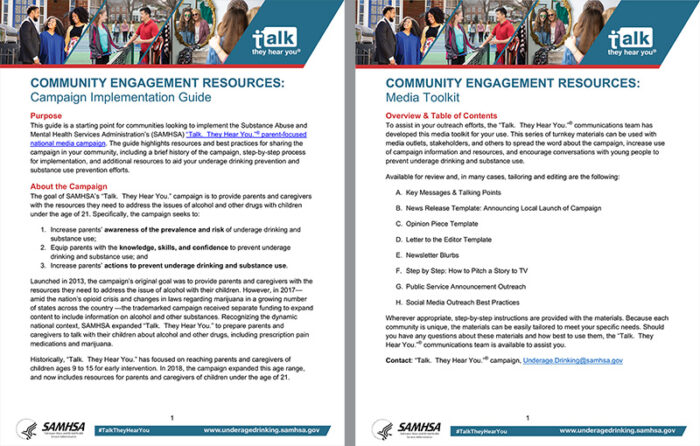
Community Engagement Resources
Various tools and documents that will support SUD providers with proper languages, media involvement, and overall techniques to use when engaging with the community.
Substance Misuse Prevention for Young Adults
This guide discusses effective prevention practices to mitigate risk factors associated with substance misuse and promote protective factors among: all young adults generally; young adults at significantly higher risk for substance misuse; and young adults who are not diagnosed with a SUD but are engaging in substance misuse.
Perinatal Substance Use: Family Toolkit
This booklet provides tools you need to be as healthy as you can be during pregnancy, whether or not you decide to stop using.
