@ TheNationalCouncil.org NATIONAL COUNCIL for Mental Wellbeing
Supporting adolescents leads to healthier and more connected communities We need to reframe adolescence from eye roll to opportunity.
Nat Kendal-Taylor, CEO of The Frameworks Institute
About Getting Candid
National Assessment Data
FOUR ONLINE SURVEYS = 2,979 youth
Weighted by age, gender identity, race/ethnicity, region of the country and area community type (e.g., rural, urban)
ONE ONLINE SURVEY = 761 youth-serving providers Representing community behavioral health, education, healthcare, government and other community organizations
From Lake Research Partners, commissioned by the National Council for Mental Wellbeing, 2021-2022 https://www.thenationalcouncil.org/resources/cdc-key-findings/
Key Finding: Youth vs. Provider Perceptions From Lake Research Partners, commissioned by the National Council for Mental Wellbeing, 2021-2022 https://www.thenationalcouncil.org/resources/cdc-key-findings/
Key Finding: Resiliency and Optimism From Lake Research Partners, commissioned by
the National Council for Mental Wellbeing, 2021-2022 https://www.thenationalcouncil.org/resources/cdc-key-findings/
Key Finding: Trust vs. Comfort
From Lake Research Partners, commissioned by the National Council for Mental Wellbeing, 2021-2022 https://www.thenationalcouncil.org/resources/cdc-key-findings/
Key Finding: Top 4 Reasons Not To Use
From Lake Research Partners, commissioned by the National Council for Mental Wellbeing, 2021-2022
https://www.thenationalcouncil.org/resources/cdc-key-findings/
Your Role as a Youth-serving Provider
Create a safe space to normalize conversations about substance use and its connection to health, school, finances and relationships.
Maximize regular touch points and established relationships to reinforce prevention messages and encourage healthy peer relationships.
Identify potential risk and protective factors.
Video: What Youth Want You to Know
Inside the Getting Candid Message Guide
https://www.thenationalcouncil.org/getting-candid
Communication Pathway
hoose the frame for communication based on insights from youth.
Select evidence to provide compelling reasons not to use drugs or alcohol.
Select one or more actions to suggest.
Establish Trust
Build rapport and establish trust. Ask permission before sharing information with them. Create a safe space. Be authentic.
Approach the conversation informally.
Do more listening than talking.
Be transparent and trustworthy.
Pay attention to body language.
Youth Ambassador Tips for Building Trust & Rapport
Gather Insights
Seek guidance and input from youth on what matters to them.
Ask open ended questions such as…
What matters most to you in your life and why?
What are you looking forward to most in the coming year (or after you graduate, or beyond) and why?
When you’re faced with making a tough choice or decision, what do
you consider or think about most?
Three Tips
Declutter
Stay Curious
Pause the Fix
Gathering Insights with Alex, age 15
My best friend at school has been smoking weed - a lot. He’s stressed all the time because his parents are getting divorced. He says he is angry and no one understands. I’m not going to ditch him but I don’t want either of us to get into trouble from the weed.
Communication Pathway
FRAME THE COMMUNICATION
MAKE THE CASE SUGGEST ACTION
“What Matters” Becomes the Framework
What Matters…?
Message Frame
Plans for the coming year, for entering high school, college or for the future in general
The future
Physical or mental health
Risk of addiction
Relationships (e.g., parents/guardians,
friends, teachers, coaches, mentors)
Relationships
Activities in or out of school (e.g., music, sports, volunteering)
Activities
Being respected for autonomy and being
able to make one’s own choices
Self-affirmation
Frame the Communication
FRAME THE COMMUNICATION
MOST EFFECTIVE MESSAGES TESTED WITH YOUTH:
The Future: Don’t let drug and alcohol use
change or control your plans for the future.
Risk of Addiction: Drug and alcohol use changes parts of your brain that impact how you think and act. The more you use, the harder it can be to stop, even if you want to.
Relationships: There are people in your life who matter to you. (For middle school) And you try hard not to let them down. (For high school) And you try hard to make them proud.
Activities: Participating in sports, music, hobbies or other activities can help you build friendships, stay in shape, get into and
receive scholarships for college and have fun.
Self-affirmation: You respect yourself and want to make decisions that are best for you. Trust yourself and your choice not to use drugs or alcohol.
Make the Case
FRAME THE COMMUNICATION
MAKE THE CASE
EXAMPLES OF STATEMENTS CONSIDERED MOST CONVINCING BY YOUTH:
People in recovery from addiction often say one of the things they regret most about their addiction is the trust they lost from people who care about them.
Vape companies regularly change up their chemical formulas to get around regulations and safety testing of their products.
It only takes a pinprick-sized amount of fentanyl to be a deadly dose. And it’s sometimes hidden in fake prescription pills.
Delta-8 THC is not regulated, so you don’t really know what is in it. Some people ended up having a medical emergency because the concentration was too high or they didn’t realize delta-8 THC was psychoactive until it was too late.
Suggest Action
FRAME THE COMMUNICATION
MAKE THE CASE SUGGEST ACTION
ACTIONS IDENTIFIED BY YOUTH AS THOSE THEY WOULD MOST LIKELY TAKE:
Explore new ways of dealing with stress, like music, reading, art, getting outdoors, talking with friends you trust or just being by yourself.*
Educate yourself about alcohol, tobacco/nicotine, marijuana and other drugs by visiting a website or information on social media from a factual source.
Make your own personal commitment or pledge to avoid alcohol, tobacco/ nicotine, marijuana and other drugs.*
*Resonated particularly well with middle school youth.
Find someone you can talk to if you feel tempted or pressured to use alcohol, tobacco/nicotine, marijuana or other drugs.
Talk to your friends. Encourage them not to use alcohol, tobacco/nicotine, marijuana or other drugs.*
Interested in bringing a Getting Candid virtual workshop to your workplace or other group of youth-serving providers? Fill out our workshop request form linked below or reach out to us via email at GettingCandid@TheNationalCouncil.org.
https://www.surveymonkey.com/r/ttarequestform
Questions? Survey
Please complete this brief survey to tell us how we did!
https://www.surveymonkey.com/r/VZDB8QS
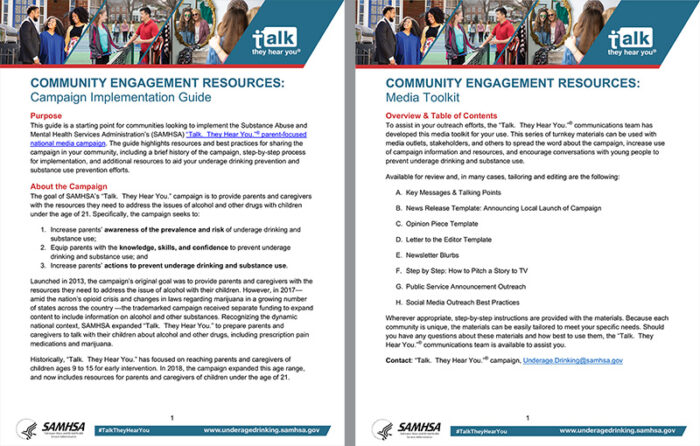
Various tools and documents that will support SUD providers with proper languages, media involvement, and overall techniques to use when engaging with the community.
This guide discusses effective prevention practices to mitigate risk factors associated with substance misuse and promote protective factors among: all young adults generally; young adults at significantly higher risk for substance misuse; and young adults who are not diagnosed with a SUD but are engaging in substance misuse.