
Opioid Overdose Assessment Response Reporting Naloxone Administration Distribution
To provide training to staff, participants and visitors in dealing with a somnolent patient, visitor or staff member in the setting of suspected opioid overdose. This policy aims to improve safety, reduce morbidity and mortality, and enhance the quality of life for those in treatment for substance use disorder through the access of lifesaving medications
SUBJECT: OPIOID OVERDOSE ASSESSMENT, RESPONSE AND NALOXONE ADMINISTRATION
APPROVED BY:
EFFECTIVE:
REVISED:
Opioid Overdose Assessment, Response and Naloxone Administration & Distribution
PURPOSE:
To provide training to staff, participants and visitors in dealing with a somnolent patient, visitor or staff member in the setting of suspected opioid overdose. This policy aims to improve safety, reduce morbidity and mortality, and enhance the quality of life for those in treatment for substance use disorder through the access of lifesaving medications to avert opioid overdose related death.
DEFINITION:
Naloxone refers to the intranasal formulation of the opioid antagonist used for the acute treatment of opioid overdose.
Naloxone education refers to the minimum a person will be trained: the causes of an opioid overdose, mouth to mouth resuscitation, how to contact appropriate emergency services, and how to administer an opioid antagonist.
POLICY:
All staff will attend training and demonstrate competence to assess and respond to an opioid overdose and when indicated administer intranasal naloxone (Narcan). At minimum, the agency will maintain, at all times, at least two unexpired doses of naloxone, or any other opioid antagonist medication that is approved by the FDA for the treatment of an opioid overdose, on the premises.
Additionally, the agency will have at least one staff member, at all times, on the premises who knows the specific location of naloxone or other FDA approved opioid antagonist medications, and who has been trained in its administration. Training includes live facilitator lead format and review of online resources and the National Harm Reduction Coalition website to respond effectively to an opioid-associated overdose emergency. Staff are required to certify that they have reviewed and undergone training in opioid overdose prevention and response. Narcan is stocked near first aid kits at all treatment centers.
RESPONSIBILITY:
It is the responsibility of all practice providers, clinical, and non-clinical support staff to provide care in compliance with this policy.
Good Samaritan Law
A person cannot be liable for any civil damages that result from his or her providing emergency care, if:
- The person acted in good faith, and not for compensation;
- The person provided either emergency medical care or nonmedical care and;
- The care was provided at the scene of an emergency.
Drug Overdose Treatment Liability Law
Eliminates civil and criminal liability for:
- Licensed health providers that prescribe naloxone and issue standing orders for the distribution of naloxone; and
- Individuals that administer naloxone to someone suspected of experiencing an overdose if they’ve received training to administer the dose.
- California Civil Code 1714.22 mandates minimum education as:
- The causes of an opiate/opioid overdose
- Mouth to mouth resuscitation
- How to contact appropriate emergency medical services
- How to administer an opioid antagonist
AB 2760
The law requires prescribers to offer a prescription for naloxone hydrochloride or another drug approved by the United States Food and Drug Administration for the complete or partial reversal of opioid depression to a patient when one or more of the following conditions are present:
The prescription dosage for the patient is 90 or more morphine equivalents of an opioid per day.
An opioid medication is prescribed concurrently with a prescription for benzodiazepine.
The patient presents with an increased risk of overdose, including a patient with a history of overdose, a patient with a history of substance use disorder, or a patient at risk for returning to a high dose of opioid medication to which the patient is no longer tolerant.
This law also requires prescribers, consistent with the existing standard, to provide education to patients, persons designated by the patient, or for minor patients, to their parents or guardian, if they fall under one of the above conditions, regarding overdose prevention and the use of naloxone hydrochloride or another drug approved by the United States Food and Drug Administration for the complete or partial reversal of opioid depression.
PROCEDURES:
STAFF TRAINING:
Once annually, all staff will receive training in the assessment and response to opioid overdose and administration of naloxone. Training will be offered in a live facilitator lead format and a with review of online resources such as the National Harm Reduction Coalition Opioid Overdose Basics website and California Department of Public Health Administering Naloxone - YouTube video (https://www.youtube.com/watch?v=nurz9qPGKws).
Evidence of compliance and competency with this policy will be documented in personnel records.
All staff are required to obtain CPR/AID certifications and are to be renewed every two years. A copy of the certification shall be kept in the personnel file.
All (agency name) treatment sites will have a designated Safety Captain. Safety Captains are to inform Program Managers if naloxone has been used and needs to be replaced. Program Manager/Director is responsible for data tracking management, including assuring incident reporting has been completed according to (agency name) Incident Report policy.
PARTICIPANT EDUCATION, TRAINING AND DISTRIBUTION:
All participants are trained and educated in the assessment and response to opioid overdose and administration of naloxone. The following is currently in practice and adhered to:
- Outpatient Treatment Program provides training and distribution of naloxone during the intake process.
- Narcotic Treatment Program provides training and distribution of naloxone during the intake process.
- Residential Treatment Program provides group training every other week. Naloxone is readily accessible in common areas throughout the care sites within the organization and distribution of naloxone is given upon discharge through the protocol for naloxone prescribing.
Documentation
A progress note on overdose prevention / response training and naloxone distribution is to be documented in participant’s chart. A care management note outlining the steps taken to acquire and deliver the medication to the participant is required.
Take home naloxone provided upon discharge:
To mitigate the risks of opioid overdose among participants, upon discharge and for all participants the agency will transmit patient-level prescriptions of naloxone hydrochloride under a protocolized local standing order to a local pharmacy for dispensing. Designated treatment staff will utilize the Protocolized Local Standing Order to transmit naloxone prescriptions to participants pharmacy according to the standardized procedure articulated below.
STAFF RESPONSIBILITIES
This Protocolized Local Standing Order will be executed by a physician, nurse, and or (agency name) staff. Reviews and necessary revisions will be conducted and signed by Medical Director. Reviews will be conducted not less frequently than biannually.
The Medical Director will maintain a written record of treatment staff authorized to perform the functions of the standardized procedure stated below.
The Prescribing Clinician shall be responsible for assessing the competence of the designated staff in following this protocol. No standing order may be used unless specifically approved by the prescribing clinician.
In accordance with CA Business and Professions Code 4040 and facility’s written and approved protocol, designated staff will compile and submit the following information when transmitting naloxone prescriptions through phone call transmission:
- Name of Medical Director or other Designated Prescribing Clinician
- Medical Director or other Designated Prescribing Clinician’s License # and NPI #
- Patient Name(s), DOB(s), and Address(es) – can use facility address or the patient’s home address
- Formulation and quantity of naloxone, instructions for use, and any refills
Dispense one box, two pack of intranasal naloxone spray, administer one spray in each nostril every 1-minute prn overdose, # 12 refills
In addition to the products specifically enumerated above, other naloxone formulations may be dispensed under this standing order so long as they have been approved by the United States Food and Drug Administration and are identical to one of the listed formulations in strength, dose volume, route of administration and pharmacologic action.
Any specific delivery instructions or requests for the pharmacy to confirm when medication will be ready for pick-up or approximate delivery date. Staff will either pick up the prescription from the pharmacy or have it delivered to the agency then staff will deliver it directly to the participant.
Opioid Overdose Response:
The definitive treatment for an onsite opioid overdose is to administer naloxone and call 9-11.
Rescue breathing is neither encouraged nor discouraged.
Follow the steps to respond to an onsite overdose, including rescue breathing.
- Recognize signs and symptoms (pinpoint pupils, gurgling/chocking sound, blue or grayish skin, etc.)
- Call or tell someone to call 911.
- Check responsiveness, sternum rub, pulse, breathing, signs of life, etc.
- Administer naloxone/Narcan.
- Start rescue breathing, continue rescue breathing until the participant breaths on their own.
- Stay with the participant until emergency medical services arrive.
- If the participant does not come to within 2-3 minutes, use another dose in the opposite nostril. Given the rise of illicit and contaminated fentanyl, more than one dose may be needed.
- If the participant responds and wakes up tell them to stay with you to rest and regain their strength, they could go back into respiratory distress if the naloxone/Narcan wears off or if they use opioids again.
- Advise the participant not to use opioids for the rest of the day because the Narcan can cause precipitated withdrawal and a higher-than-normal amount of opioids will be needed to achieve a high which could trigger another overdose or respiratory emergency.
PROTOCOL:
When encountering a somnolent patient, visitor or guest, staff will:
- Try to stimulate them awake by yelling their name, loudly telling them that you will call 911 and administer Narcan and rubbing knuckles to breastbone/sternum.
- If the person does not respond, call, or tell someone to call 911, have others clear the room, use other staff to assist with any milieu matters.
- Check respiration. Check pulse. Look, Listen, Feel, and place ear by person’s mouth, watch for a rise or falling chest, feel for any respiration air flow. Assess for 15 seconds. Listen for choking or gurgling sounds, watch for bluing of the person’s lips, face, or fingernails.
- Administer naloxone/Narcan (instructions also included in Narcan kit)
- a) Peel back the package to remove the device. Hold the device with your thumb on the bottom of the plunger and 2 fingers on the nozzle.
- b) Place and hold the tip of the nozzle in either nostril until your fingers touch the bottom of the person’s nose.
- c) Press the plunger firmly to release the dose into the patient’s nose.
- d) If they do not wake up within 2-3 minutes, use another dose in the opposite nostril.
Given the rise of illicit fentanyl, counterfeit prescription medications and illicit drugs contaminated with fentanyl, more than one dose of naloxone may be needed.
Start rescue breathing:
a) Make sure nothing in mouth.
b) Tilt head back
c) Lift chin
d) Pinch nose shut
e) Give 2 quick breaths
f) Make sure chest is rising
g) Then 1 slow breath every 5 seconds
If/when the person begins to breath, roll them on their side with top leg and arm crossed over their body: the recovery position.
Do not leave the person alone. Stay with the person until emergency medical services arrive.
a) After naloxone/Narcan is administered, a person will go in withdrawal. This can be confusing and scary, some believing they did not overdose. An individual may immediately feel sick, they may seek to use again to relieve their symptoms. Be sure to advise the person not to take more opioids.
b) Explain that the original drugs are still in their system, and so when the naloxone wears off, they can slip back into respiratory distress.
c) If a participant requires medical attention for any reason, medical clearance is required before returning to programming. An assessment of the necessity of medical clearance will be made on a case-by-case basis and with the consent of the participant. A combination of a consultation with an internal Health Care Practitioner (HCP: MD, NP, LVN) and or outside medical assistance is applicable if needed.
REPORT AN OPIOID OVERDOSE
- The Director will be the responsible person for reporting overdose reversal data to naloxone@dhcs.ca.gov based on (Agency Name) Incident Report policy and to SAPC using the SAPC reportable incident form.
- An active count of all overdose reversals performed by agency staff and those reported to the agency by participants or visitors will be kept and maintained by the Harm Reduction Program Manager. The total number of overdose reversals performed and reported to the agency using DHCS grant funded naloxone kits will be used to reapply for the next allotment of naloxone kits from the Naloxone Distribution Project.
- All overdose reversals conducted by staff on site or in the field will be documented using the overdose reversal report form and reported to naloxone@dhcs.ca.gov and SAPC using the SAPC reportable incident form by the Director
- SAPC Reportable Incident Form
All overdose reversals reported to the agency by participants, visitors or community stakeholders using DHCS grant funded naloxone will be documented using the Overdose reversal report form and reported to naloxone@dhcs.ca.gov.
Sample overdose reversal report form.
Naloxone Distribution Project:
Storage and labeling
- DHCS NDP requires “separate storage of naloxone received through the program from other medications that may be billed to participant insurance”.
- Naloxone will be stored in an unlocked cabinet in the stock room.
- Naloxone will be readily available to staff, volunteers, or other individuals to utilize during an emergency.
Distribution
Who will distribute:
- Naloxone will be distributed by any agency staff or volunteer who has completed training in overdose prevention and overdose response.
- Both clinical and non-clinical staff may participate in Naloxone distribution following completion of training.
Documentation
- Naloxone distribution will be documented in the naloxone distribution log, which will include: (a) date of distribution, (b) participants initials (optional), (c) quantity given / number of kits distributed, (d) was an overdose reversed: yes or no? (e) was overdose prevention and overdose reversal education provided to the participant: yes or no? (f) staff/volunteer initials.
Overdose reversal reporting
- The Director will be the responsible person for reporting overdose reversal data to naloxone@dhcs.ca.gov based on (Agency Name) Incident Report and to SAPC using the SAPC reportable incident form.
- An active count of all overdose reversals performed by agency staff and those reported to the agency by participants or visitors will be kept and maintained by the Harm Reduction Program Manager. The total number of overdose reversals performed and reported to the agency using DHCS grant funded naloxone kits will be used to reapply for the next allotment of naloxone kits from the Naloxone Distribution Project.
- All overdose reversals conducted by staff on site or in the field will be documented using the overdose reversal report form and reported to naloxone@dhcs.ca.gov and SAPC using the SAPC reportable incident form by the Director.
- SAPC Reportable Incident Form
- All overdose reversals reported to the agency by participants, visitors or community stakeholders using DHCS grant funded naloxone will be documented using the overdose reversal report form and reported to naloxone@dhcs.ca.gov.
- Sample overdose reversal report form.
Order justification
- (Agency name) is a multi-site integrated SUD service delivery system in Los Angeles County. SUD service delivery reaches many participants per month through residential, outpatient and an opioid treatment program. Additionally, multiple teams engage and encounter participants, visitors and community stakeholders through community outreach and education. It is through this capacity that the agency seeks to supply individuals at risk for opioid overdose and those adjacent to them with Narcan. We request (Insert the number of boxes (2 pack) requested here) boxes of Narcan.
Quality assurance
- Naloxone distribution logs will be reviewed regularly by the [Program Manager] and any discrepancies will be reported to the Clinical Director of Operations.
- Unusual occurrences related to the distribution of naloxone will be promptly reported and reviewed.
Related Posts
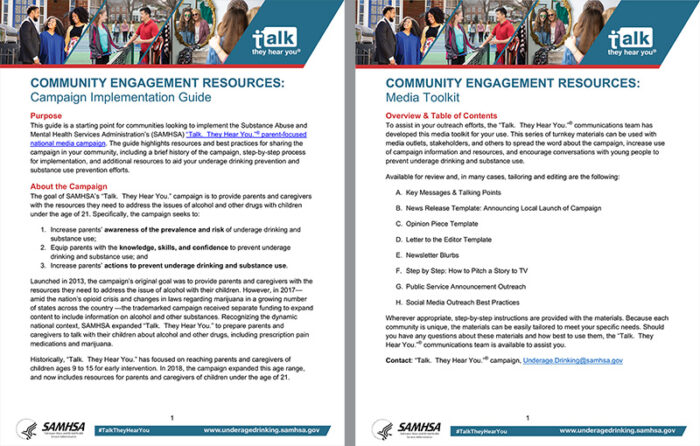
Community Engagement Resources
Various tools and documents that will support SUD providers with proper languages, media involvement, and overall techniques to use when engaging with the community.
Substance Misuse Prevention for Young Adults
This guide discusses effective prevention practices to mitigate risk factors associated with substance misuse and promote protective factors among: all young adults generally; young adults at significantly higher risk for substance misuse; and young adults who are not diagnosed with a SUD but are engaging in substance misuse.
Perinatal Substance Use: Family Toolkit
This booklet provides tools you need to be as healthy as you can be during pregnancy, whether or not you decide to stop using.
